-
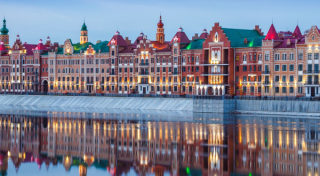
DestinationRepublic of Mari El, Yoshkar-Ola, Bruges embankment
The monument to Keller in Yoshkar-Ola is dedicated to the participant of the Patriotic War of 1812 and the author of a unique description of the Tsarevokokshay district. Its peculiarity is the conventional image of the hero: the lifetime portrait has not been preserved. How did a man without a famous image become a symbol of an entire epoch in the history of the city?
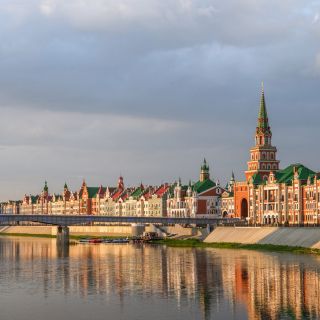
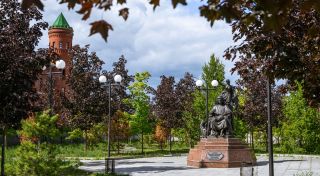
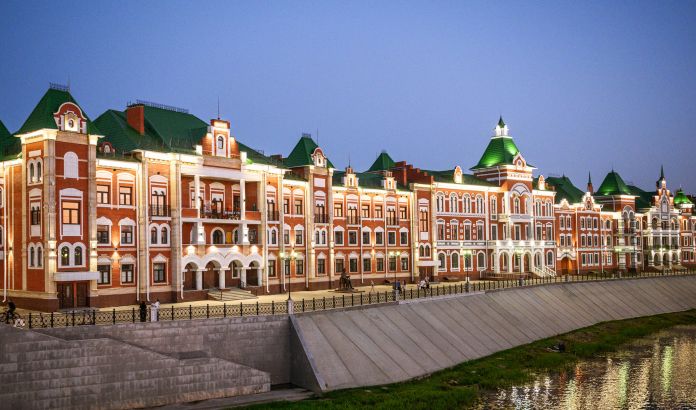
On December 30, 2013, the sculpture was installed on the banks of the Malaya Kokshaga River. On April 30, 2015, the composition was moved to the opposite shore. Today, the bronze figure is located next to the W.H. Columbus Republican Library for Children and Youth, on the Bruges embankment.
Alexander Andreevich von Keller was born around 1789. On April 30, 1807, he joined the Lubensky Hussar Regiment with the rank of non-commissioned officer. In 1813, he received the officer rank of cornet, and from 1817 he served as divisional adjutant. In 1820, he was declared "The Highest Favor" for his exemplary training of soldiers.
After his military service, Keller moved to Kazan province. From 1830 to 1862, he served as the Tsarevokokshaysky district police officer. He was appointed by the governor because there were not enough nobles in the county for the election procedure. Keller actively supported the national enlightenment and left the most important historical source, the Statistical Description of the Tsarevokokshay District of the Kazan Province. This work contains information about the geography, population and way of life of the Mari, Tatars and Russians.
The monument to Keller is a one-figure composition. A bronze figure is mounted on a granite pedestal. Keller is depicted sitting in a calm pose, as if reflecting on the fate of the county. The main feature is the reconstructed exterior. Sculptors A.A. Shirnin and S.V. Yandubaev created the image based on historical information, since the portrait of the hero has not been preserved. This gives the monument a special character: this is not an exact copy, but an artistic interpretation of the personality.
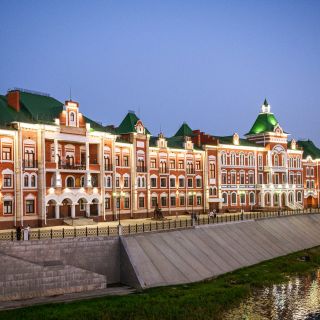
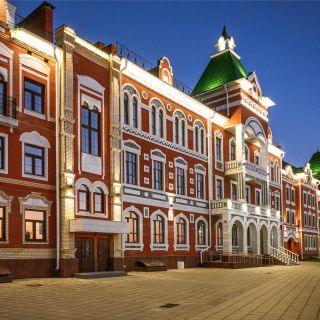
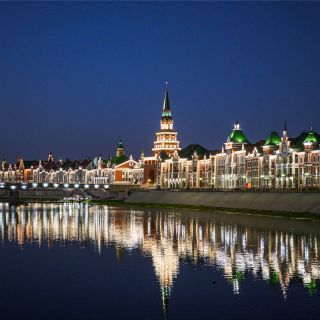
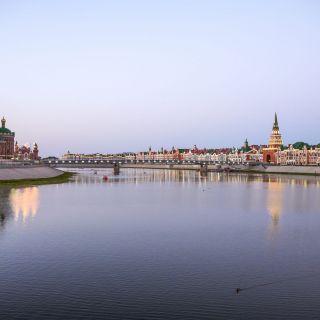
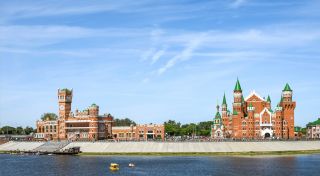
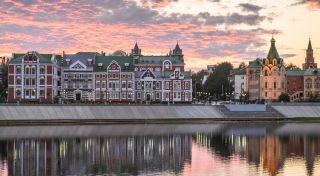
The territory is landscaped. Nearby is the pedestrian area of the Bruges embankment, a popular place for walking and photographing.
Interesting facts about Keller
-
He
- came from a German family, adopted Russian citizenship and Orthodoxy.
- He was fluent in several languages: Russian, German, English, French and Italian. For
- more than 30 years he served as the zemstvo police officer of Tsarevokokshaysk. He
- received the official gratitude of the emperor for the training of soldiers.
- His manuscripts are considered a valuable source on the history of the Mari Region. The
- issue of the barony remains a subject of debate among historians.
Practical information for tourists
How to get to the Keller Monument
- By car: move along Eshkinina Street towards the embankment. There is free parking nearby.
- By public transport: stop "Szombathely neighborhood". On
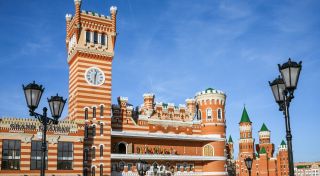
- foot: from Chavain Boulevard, walk towards the Spasskaya Tower and turn towards the embankment. From the center – through the Blagoveshchenskaya Tower and the Theater Bridge.
Availability: The facility is located in an open landscaped area and is accessible to people with disabilities.
Tips for tourists
The best time to visit is during the daytime, when you can view the details of the sculpture and take photos against the background of the river. It takes 5-10 minutes to explore, but a walk along the embankment will take longer.
Take a camera or smartphone: the composition harmoniously fits into the urban landscape. It is forbidden to climb on the pedestal and leave garbage.
Nearby are the Museum of History and Archeology, Chavain Boulevard, as well as other city center facilities – an excellent route for those who plan to see Yoshkar-Ola in one day.
Where to stay and eat
There are hotels and a wide variety of cafes with menus for every taste within walking distance. This is a convenient option for relaxing after a walk.
The Keller monument in Yoshkar-Ola commemorates a man who devoted his life to service and study of the region. His writings still help to understand the history of the region. Include this point in your route around the city – this way the past will become closer and clearer.
Our Location
Photo Gallery