-
DestinationRepublic of Mari El, Yoshkar-Ola
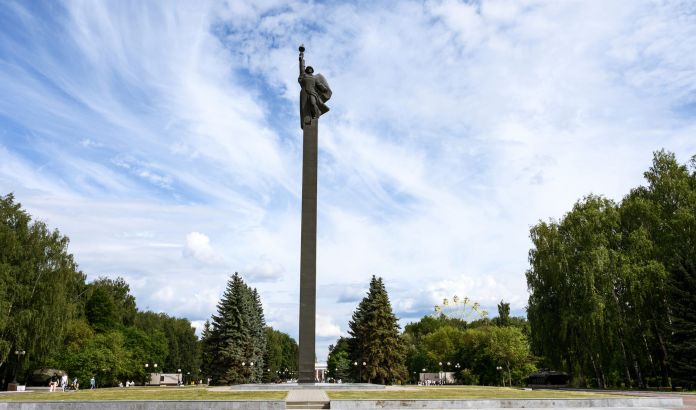
The Memorial Ensemble of Military Glory in Yoshkar-Ola is an important symbol of courage, perseverance and memory of those who gave their lives for the freedom and independence of our Motherland. This monument has become not only a part of the city's history, but also a place that unites generations in memory of the Great Patriotic War and other tragic events of the 20th century.
History of creation
The memorial was built in the 1970s, in preparation for the 30th anniversary of Victory in the Great Patriotic War. Like many other monuments of that era, the Memorial Ensemble of Military Glory was conceived as a place that should symbolize the victory of the Soviet people. Its construction has become an important stage in the cultural life not only of the city, but also of the whole country.
The site for the memorial was chosen on the site of the former village of Koryakovo, and later on Kolkhoznaya Street, in the very center of the city. The project was developed under the guidance of the city's chief artist Nikolai Vedernikov, who won a competition to create the monument.
The opening of the monument became part of a major cultural event, when in 1975, many memorials dedicated to the Great Victory were opened in the USSR. In Yoshkar-Ola, this ensemble was officially opened on May 9, 1975, when the Eternal Flame was lit.
Architecture and elements of the memorial
The memorial ensemble consists of several key parts, each of which carries symbolism and memorable elements.
Monument of Military Glory
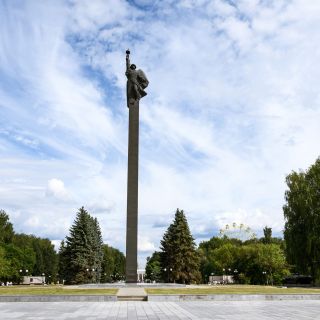
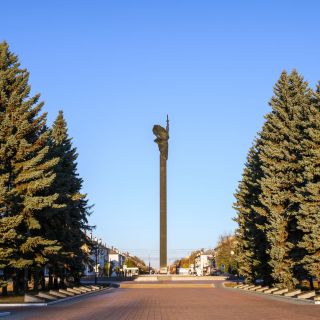
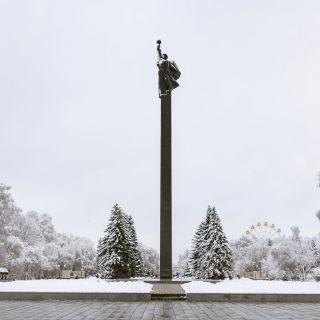
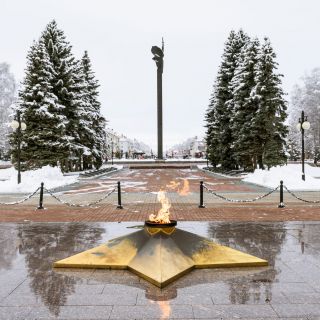
The central place in the memorial is occupied by a monument, which is often called the monument to the Unknown Soldier. This granite and copper monument is made on a 20-meter pedestal, and the 6-meter-high figure of a soldier depicts a warrior who goes into battle with his hand raised. His figure embodies the pride and heroism of the people who did the impossible during the war. The monument is made in granite, concrete and forged copper, giving the impression of strength and determination.
The Eternal Flame
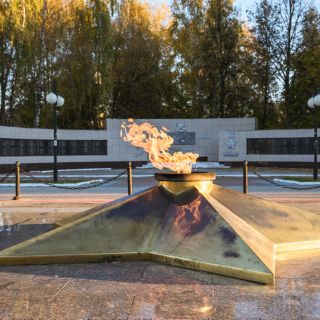
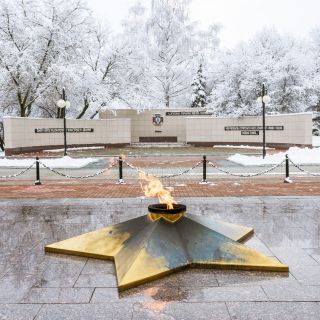
The Eternal Flame, which has become an important symbol of the memory of the dead, was lit in 1975 and brought by armored personnel carrier from the Piskarevskoye Memorial Cemetery in Leningrad. The eternal flame burns in memory of all the victims of the war, and in this place everyone can express their feelings and pay tribute.
Alley of Heroes of the Soviet Union
Stretching from the Monument of Military Glory to the Eternal Flame, the Alley of Heroes of the Soviet Union is decorated with memorial plaques with the names of 20 heroes of the Soviet Union who died during the war. This alley is a reminder of those who showed special courage and bravery in the battles for their Homeland.
Combat vehicles
Combat vehicles are located to the left and right of the monument.: BTR-70 and BMP-1. These vehicles serve as a reminder of military equipment and how it helped defend the country. The BTR-70 is an armored personnel carrier created in the late 60s, designed to transport infantry. The BMP-1 displayed at the memorial was the first infantry fighting vehicle to participate in combat operations since 1967. Both cars carry the memory of the difficult and tragic days of the wars.
Memorial walls
An important element of the memorial is several walls dedicated to various events and tragedies of the 20th century.
-
The
- wall is dedicated to the Fallen Soldiers, with the names of those killed in Afghanistan and Chechnya carved on it. This monument was erected in 1995 in honor of soldiers who died in local wars.
- The wall "And the bitter star Wormwood Fell" is a monument to the victims of radiation disasters, opened in 2004. It is dedicated to the liquidators of the Chernobyl nuclear power plant accidents, as well as the participants of the radiation disasters at the Mayak combine, Semipalatinsk and Totsk landfills.
Importance for the city and the country
The Memorial Ensemble of Military Glory in Yoshkar-Ola has become a place where residents of the city and its guests come to pay tribute to the war heroes and the memory of the tragedies that the country has experienced. This memorial serves not only as a monument to the past, but also as a symbol that we must not forget the lessons of history. For residents of Yoshkar-Ola, the memorial is a place of pride and importance, not only on holidays, but also every day when someone comes to remember.
The memory of the past preserves not only great victories, but also invisible to many, but important tragedies. The memorial ensemble in Yoshkar-Ola is a living example of how to preserve the memory of all those who left their mark on history, despite the challenges of the time.
The memorial is located in the city center at the intersection of the pedestrian boulevard Chavaina and Pervomaiskaya Street, within walking distance from the Central Park of Culture and Recreation, the Republican Library, the Opera and Ballet Theater. Just a 20-minute walk from the Malaya Kokshaga embankment.
Our Location
Photo Gallery