-
DestinationRepublic of Mari El, Yoshkar-Ola, Chernyshevsky str., 23
-
Excursion timesDaily from 10 a.m. to 6 p.m., day off - Monday
-
Excursion booking
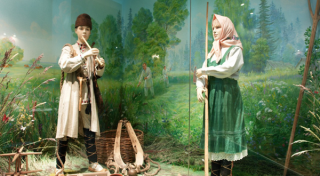
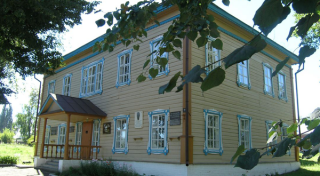
The Museum of Folk and Applied Arts in Yoshkar-Ola is a space where the traditions of the Mari masters find a voice. It opened on November 5, 1999 in a wooden house of the early 20th century and has become a meeting place between the past and the present. Here you can see authentic household items, rare embroidery and wood carvings, as well as visit the recreated interior of the Tsarevokokshay house.
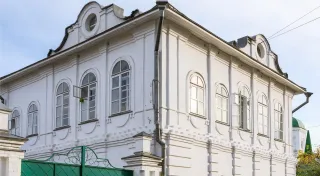
The history of the Museum of Folk and Applied Art begins with the house of contractor P. D. Lokhanov, built in 1906 on Chernyshevsky Street. Before the revolution, the building belonged to a private owner, later it housed the canton executive committee and city institutions.
In 1985, the house was transferred to the Mari Republican Museum of Local Lore. After the restoration, a branch was opened here, and in 1999, an independent museum. In 2022, the exhibition was updated as part of the Lokhanov House project: from the History of a Man and His House to the History of Craftsmanship.
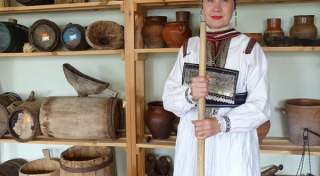
Today, the Museum of Folk and Applied Arts in Yoshkar-Ola preserves and popularizes the traditional crafts of Mari. He demonstrates how shapes, ornaments and materials changed, but the cultural codes of the people remained alive.
Cultural heritage site
The museum building is an object of cultural heritage and an example of urban wooden architecture of the early 20th century. It is a one-storey house with a mezzanine and a hip roof. The original "octagonal log cabin" from 1906, the wooden staircase and the enfilade layout of the premises have been preserved.
The facades are decorated with sawn carvings, architraves with half columns and a frieze with decorative rosettes. A balcony with an arched hem gives the house expressiveness.
They work inside:
- permanent exhibition of Mari decorative and applied art; a
- hall with a recreated interior of a city house of the early 20th century;
- embroidery collection (shawls, towels, tablecloths);
- products made of birch bark and willow rod;
- samples of artistic wood carving;
- national musical instruments; a
- workshop for classes and a lecture area.
Visitors can not only watch, but also participate in master classes.
Interesting facts about the museum
- In 2024, the Vyatka Artisan exhibition was held with more than 140 exhibits from the Kirov Regional Museum of Local Lore.
- The mobile project "From where you can hear the clink of coins" was demonstrated at the National Museum of the Komi Republic.
- The funds contain works by the winners of the RME State Prize, including works by E. A. Kozhina. The
- museum collaborates with contemporary artists and craftsmen, combining tradition and contemporary art.
Practical information for tourists
The mode of operation of theMuseum of Folk and Applied Art:
- Tuesday–Sunday: 10:00-18:00
- Monday – closed
The cost of the visit:
- adult ticket – 150 rub.
- preferential – 100 rubles.
- preschoolers (5+) – 80 rubles.
- children under 5 years old – free of charge
- holders of the Pushkin card – 100 rub
How to getto the Museum of Folk and Applied Art:
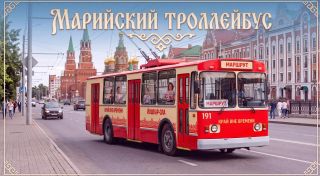
- By public transport: trolleybuses No. 2, 6, 8, 11; minibuses № 1, 18, 20, 21, 22; buses 2A and 3P; on
- foot – 10-15 minutes from the T. Evseev National Museum;
- by car, free parking is available along the street.
Tips for tourists
It is better to come on weekdays in the morning when there are fewer visitors. Schedule 1-1.5 hours to inspect the exposition, and up to 3 hours with a master class. Photography is allowed without flash.
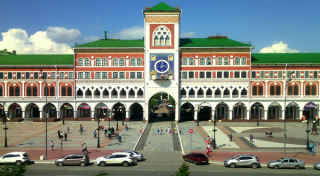
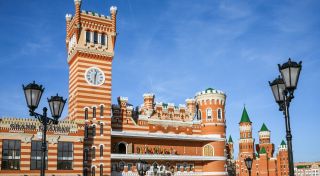
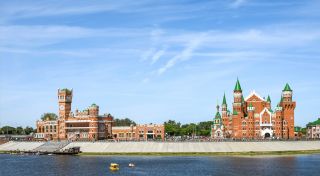
Nearby are the National Museum of the Russian Academy of Economics named after T. Evseev, Chavain Boulevard and Obolensky-Nogotkov Square. If you are planning a route through the city center and are thinking about what to see in Yoshkar-Ola, the museum is easy to include in a walking tour.
Where to stay and eat
The Sloboda, Amaks City Hoteland Revizor hotels are located nearby. You can have lunch at the cafe "Simple food", "Old Barn", "Guests" or "Soyuz".
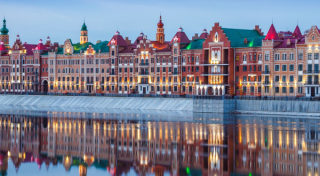
The Museum of Folk and Applied Arts in Yoshkar-Ola shows how the tradition continues to live in details - in ornament, fabric, wood. This is a place where history feels not like an abstraction, but as part of everyday life. Be sure to include the museum in your itinerary around the capital of Mari El.
Our Location
Photo Gallery