-
DestinationRepublic of Mari El, Yoshkar-Ola, Nikonov Square
The monument to Kotomkin-Savinsky in Yoshkar-Ola is dedicated to the poet, playwright and Guslar, whose fate connected the Mari region, the imperial court and the Russian emigration. This is not just a monument, but a reminder of the complex history of the 20th century and of a man who carried the theme of the Motherland through all his work.
The history of the monument to Kotomkin-Savinsky begins with the idea of returning the poet's name to the cultural space of the republic. The monument was inaugurated on June 24, 2013. It was erected in honor of Alexander Yefimovich Kotomkin-Savinsky, a white officer, participant in the First World War, poet and representative of the first wave of Russian emigration.
Alexander Kotomkin was born on September 18, 1885 in the village of Savino near Tsarevokokshaysk (now Yoshkar-Ola). By the name of his native village, he took the literary pseudonym Savinsky. Already in his youth, his poetic talent manifested itself: he wrote poetry from the age of 15, played the harp.
After graduating from the Knyazhninsky Men's College, he was sent to the Alekseevsky Military School in Moscow, one of the most prestigious in the country. The young poet was supported by Grand Duke Konstantin Konstantinovich. In 1909, Niva magazine published his poem "The Call."
The Revolution of 1917 and the Civil War became crucial. In 1920, Kotomkin left Russia, first ending up in Bulgaria, then in Czechoslovakia. He died on November 23, 1964 near Hamburg and was buried in Germany.
The monument to Kotomkin-Savinsky in Yoshkar-Ola symbolizes the return of his name to his homeland and recognition of his contribution to the history of the region.
The monument is made in a classical manner, cast in Kazan. The poet's figure conveys the image of a thoughtful and focused person. The inscription on the pedestal is laconic: "Alexander Yefimovich Kotomkin-Savinsky." The sculpture is organically integrated into the urban environment and has become part of the cultural route of the Yoshkar-Ola center.
Interesting facts about Kotomkin-Savinsky
-
The
- poet came from a peasant family, but was involved in the court circles of St. Petersburg.
- His work was supported by a member of the imperial family.
- He combined military service and literary activity. He
- played the harp and performed as a harp teacher.
- After emigrating, he continued to write, keeping the theme of Russia in his works.
- The Kotomkin Prize has been established in the Republic of Mari El to support young authors.
Practical information for tourists
How to getto the monument to Kotomkin-Savinsky
- By car: focus on the center of Yoshkar-Ola, the main city attractions are located nearby.
- By public transport: buses and minibuses going to the central stops of the city are suitable.
- On foot: It is convenient to combine a walk with a tour of the historical center.
Availability: The territory is open, accessible to visitors with limited mobility.
Tips for tourists
The best time to visit is during the warm season or on a clear winter day, when you can take a quiet stroll through the city center. 5-10 minutes is enough to inspect the monument, but it is worth investing more time for a walk around the neighborhood.
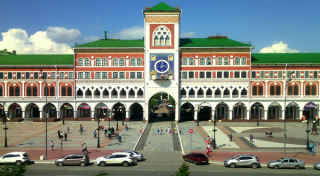
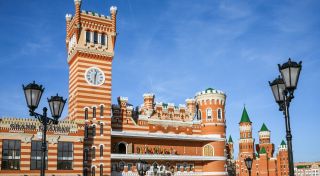
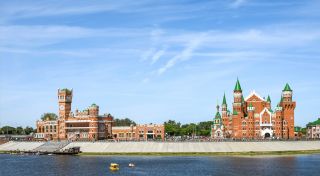
Nearby are the Academic Russian Drama Theater named after. Konstantinova, the cultural and exhibition center Tower, the snow-white temple of the Life-Giving Trinity.
Where to stay and eat
Hotels of various levels and numerous cafes are located in the center of Yoshkar-Ola. This allows you to combine a cultural walk with a comfortable rest.
The monument to Kotomkin-Savinsky is a point of contact with the difficult history of the country and the fate of the poet, who went from a peasant's son to an emigrant of the first wave. Visit it during a walk around Yoshkar-Ola to better understand the cultural context of the region and discover another page of its past.
Our Location
Photo Gallery