-
DestinationRepublic of Mari El, Yoshkar-Ola
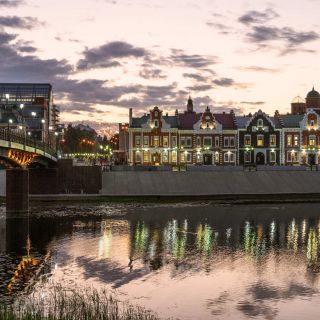
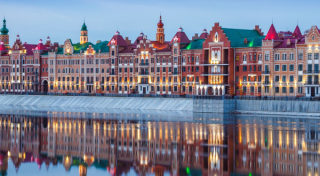
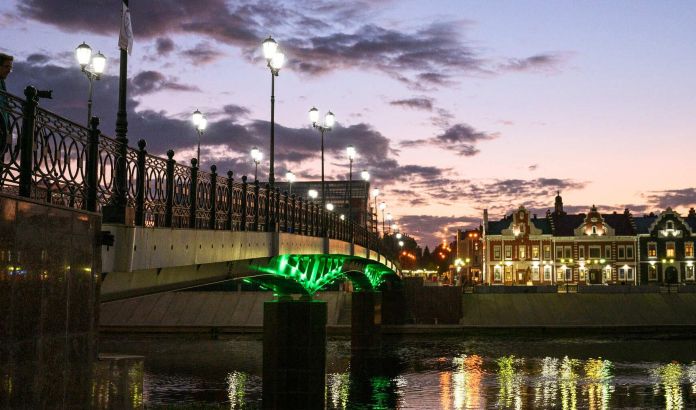
The Gogol Bridge in Yoshkar-Ola is a modern pedestrian crossing over the Small Kokshaga River, which quickly became part of the urban landscape. It was opened in December 2012 to change the transportation scheme of the center. Today it is not just a convenient ferry, but a popular place for walks and photo shoots overlooking the Bruges embankment.
In the early 2010s, the embankment and surrounding streets in Yoshkar-Ola were actively improved. The central bridge was under heavy load: both cars and pedestrians were moving along it. On December 24, 2012, the new pedestrian bridge was officially opened. Its construction made it possible to make the Central Bridge completely vehicular, and redirect pedestrian flows to a separate crossing.
The connection with the name of Nikolai Gogol is not accidental. Nearby, at the very beginning of Gogol Street, there is a monument to the writer, and the bridge logically fits into the already established architectural ensemble. Thus, the facility has become not only an engineering structure, but also a part of the cultural space of the city.
The Gogol Bridge is located between Gogol Street and the Bruges Embankmentin Yoshkar-Ola. It crosses the Malaya Kokshaga River and connects the key walking routes of the center.
Main Features:
- Length – 132 meters
- Four pillars: two coastal and two main The
- depth of the supports is about 8 meters.
During the construction, special technologies were used to strengthen the foundation, since the soils in the floodplain of the river require additional stability. The spans are supported by powerful structures that ensure reliability and durability.
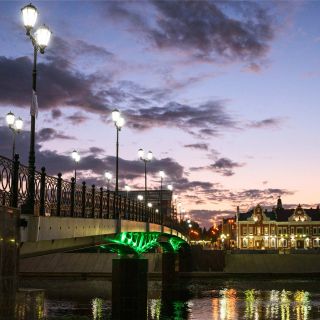
The coating is made of natural granite tiles. The metal fences are designed in a simple style and are in harmony with the architecture of the embankment. Ramps of increased length deserve special attention – they are convenient for people with disabilities, parents with strollers and cyclists.
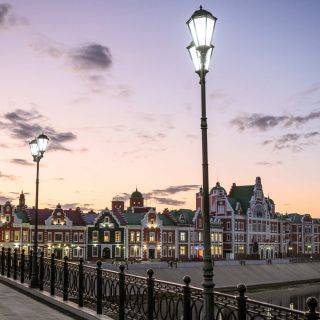
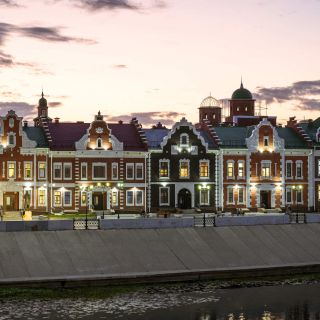
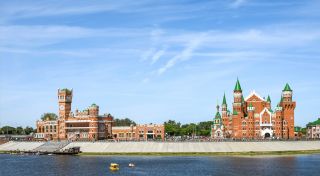
The bridge offers panoramic views of the river, domes and facades of the embankment. In the evening, the backlight turns on, creating a soft light line over the water.
Interesting facts about the Gogol Bridge
-
The
- bridge was opened on New Year's Eve, December 24, 2012.
- Its construction became part of a large-scale reconstruction of the historical center. The
- name is associated with Gogol Street and the monument to the writer at the entrance to the bridge.
- Granite cladding was chosen taking into account the climate of the region – the material is resistant to frost.
- Gogol Bridge is often used for urban photo shoots and wedding walks.
Practical information for tourists
How to get to Gogol Bridge
- By car: Head downtown to the Bruges waterfront. Parking is possible on the adjacent streets.
- By public transport: The routes that follow to the stops "Bruges Embankment" or "Central Market" are suitable. On
- foot: from Lenin Square – about 10-15 minutes at a steady pace.
The facility is open and accessible to visitors with limited mobility due to the gentle ramps.
Tips for tourists
The best time to walk is in the evening, when the lights turn on and the reflections in the water become especially expressive. 15-30 minutes is enough for an inspection, but many stay longer for the sake of photos.
If you are planning a route through the center, include the bridge in the list of things to see in Yoshkar-Ola. Nearby are the Bruges Embankment, the Gogol Monument, the Young Spectator Theater and other city facilities.
The Gogol Bridge is an example of how modern infrastructure can become part of a cultural space. It is convenient, functional and open to everyone. Walking along it, you will see Yoshkar-Ola from a new perspective and feel the rhythm of the city by the water.
Our Location
Photo Gallery