Sernura Municipal District
In the Republic of Mari El, the Sernur district is one of the oldest centers of Mari traditional culture. In 1828, after the largest All-Mari prayer, Sernour began to be called "Jerusalem for all Mari people." The people carefully preserve their national religious traditions and still worship the gods and the forces of nature. Prayers are held in sacred groves (Koto), which are considered natural monuments. There are 113 sacred groves in the territory of the Sernur district, 47 of them are operational.
Thevillage of Sernur occupies a special place both culturally and economically for the northeastern territory of the Mari Territory. In pre-revolutionary times, a trade route leading from Kazan to Vyatka passed through Sernur. And Sernur itself was considered a rich trading village with one of the best fairs in Urzhum district.
In 1920, the Peledysh Pairem holiday, popular and beloved by the people, originated on the Sernur land. Its name translates from Mari into Russian as "flower festival". The holiday begins with a procession of representatives of the settlements, led by honored guests and district leaders. During the ceremonial part of the event, distinguished production leaders are traditionally awarded. The best art groups of the Sernur district present a festive concert. The Podvorye competition has become a traditional one, with variety, folklore, and playgrounds. Sports competitions are held. At the event, you can taste dishes of the Mari national cuisine. The event ends with an evening concert program and a mass celebration.
Many well-known people in the republic and the country were born and raised in the Sernur district. These are writers: A.F. Konakov, Shabdar Osyp (I.A. Shabdarov), Yivan Kirla (K.I. Ivanov), Dmitry Oray (D.F. Bogoslovsky), K.K. Vasin, Zoya Dudina (Z.M. Glushkova), Svetlana Grigorieva (S.D. Arkhipova), scientists: A.S.Patrushev, S.Ya.Chernykh, G.A.Sepeev, D.E.Kazantsev, E.N. Mustaev, E.E. Mamaev, L.I. Shabalin, G.A. Sapeev, A.N. Chimaev, athletes: N.P. Selyunina, V.N. Isaev, opera singer G.T. Okuneva-Lastochkina, flautist V.V. Shapkin, composer I.N. Molotov, artists M.E. Medikova, L.N. Kupsoltseva and many others.
The priest of the Church of the Savior in the village of Sernur, the beekeeper scientist Epiphany Gusev (1809-1869), who became the inventor of the artificial method of breeding queens, became famous all over the world, anticipating a similar invention by the American scientist Doolittle. Nikolai Alekseevich Zabolotsky, a classic of Russian poetry and translator, spent his childhood years in Sernour. The Zabolotsky family lived in Sernur in 1910-1917. The poet called this region the state of daisies. "The places in this Sernour and its surroundings were amazing! My first indelible impressions of nature are connected with these places. I heard enough nightingales there, saw enough sunsets and all the chaste charm of the plant world. I have lived almost entirely in big cities all my adult life, but the wonderful nature of Sernour has never died in my soul and is reflected in many of my poems...".
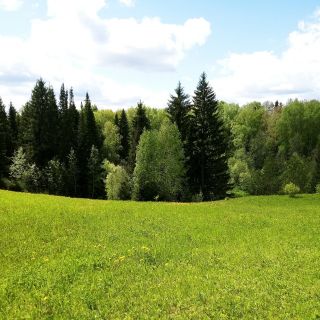
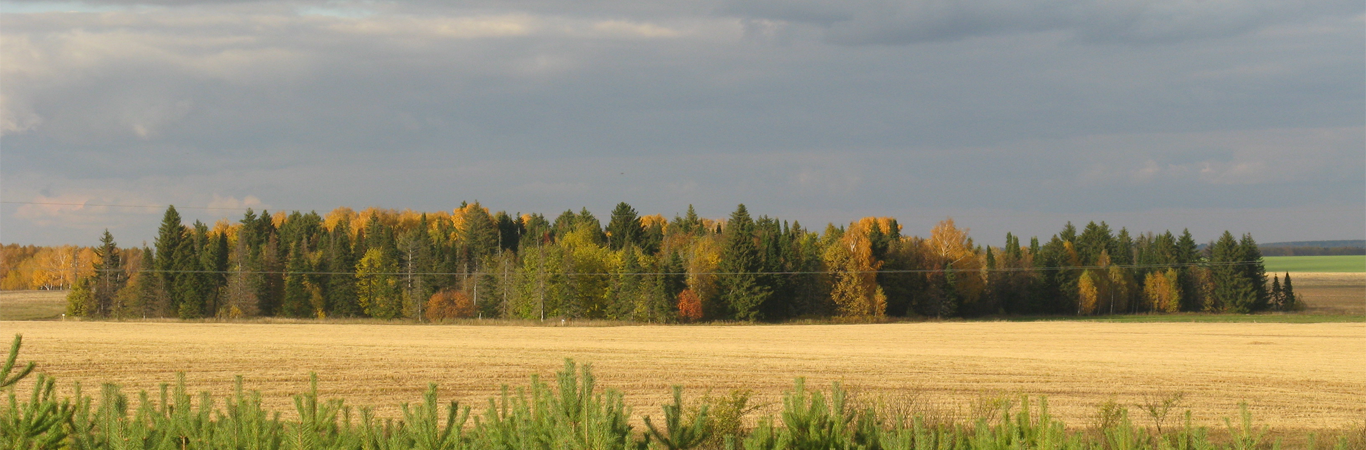
Theterritory of the district is an undulating plain. The most elevated areas are located in the south-west of the district, where the Mariisko-Vyatka ridge runs. The rivers of the district carry their waters to the Vyatka River. The longest rivers flowing through the district are Lazh and Nemda. In the forests, you can find plants listed in the Red Book of the Russian Federation. These are curly lilies, soft honeydew and black volanica.
One of the most significant natural monuments is the Larch Grove, which was founded in 1905 by the Urzhumsky timber industrialist Bushkov and is located in the Bushkovsky forest.
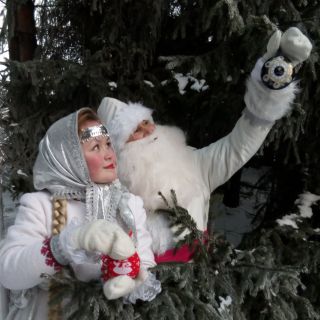
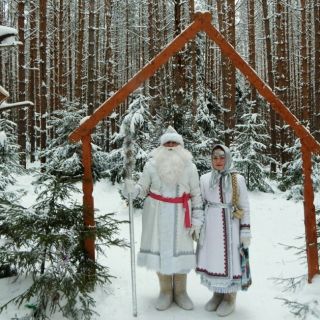
TheSernur district is located in the north of the republic. Therefore, it is no coincidence that it is here. The residence of the Mari Santa Claus is Yusht Kugyz. Tourists have the opportunity not only to get acquainted with the Mari fairy-tale characters, but also to immerse themselves in the atmosphere of rural life.
TheSernur Museum and Exhibition Complex, which contains unique exhibits dedicated to the history and culture of the region, is particularly popular.

Photo gallery