


Through thorns to the stars: the history of the Academic Russian Drama Theater named after G. Konstantinov
The official date of foundation of the Russian theater in Mari El is considered to be 1937, when a Russian troupe was created on the basis of the Mari State Theater. The first performances were “The Aristocrats” by N. Pogodin, “The Servant of Two Masters” by C. Goldoni and “Guilty Without Guilt” by A. Ostrovsky. The artistic director of the Russian troupe was B. Volodarsky, who set a high standard in staging performances.****
****
On a tragic day for our country, June 22, 1941, the premiere of the first play in Russian, dedicated to a local theme, “Ivan Shust” by I. Ustinov, took place. The plot was based on the uprising of Stepan Razin, part of the events of which took place on the territory of Mari El. The performance became a significant event in the history of the republic and Soviet drama.****
****
During the Great Patriotic War, the theater continued its work, reformatting its repertoire in accordance with the requirements of the time. Patriotic plays were staged on stage, such as “Wait for Me” and “Russian People” by K. Simonov. The theater also did not ignore classical drama - the repertoire included Shakespeare's Othello and Ostrovsky's Enough Simplicity for Every Wise Man.****
****
After the war, from 1946 to 1963, the theater continued to develop Soviet and classical drama. At this time, plays by Ostrovsky, Chekhov, Fonvizin were staged, as well as works by foreign authors - Schiller, Moliere, Shakespeare. The theater also turned to national drama, staging plays by Mari authors such as “Ksenia” by A. Volkov and “Black Wolf” by N. Arban.****
****
However, the beginning of the 1960s became a crisis for the theater. Due to frequent changes in management and fragmentation in the choice of repertoire, the theater was on the verge of collapse. By 1964, there were just over 20 people left in the troupe, and the financial situation was critical.****
****
With the arrival of chief director Georgy Konstantinov in 1964, a new era began. He managed to unite the team and return the theater to a creative purpose. Konstantinov’s productions, such as “Conscience” by D. Pavlova and “Othello” by Shakespeare, received a wide response from the audience. The theater was also replenished with young talented actors who became its basis for many years.****
****
One of Konstantinov’s landmark productions was A. Tolstoy’s tragedy “Tsar Fyodor Ioannovich,” for which the theater received the State Prize of the MASSR in 1974.****
****
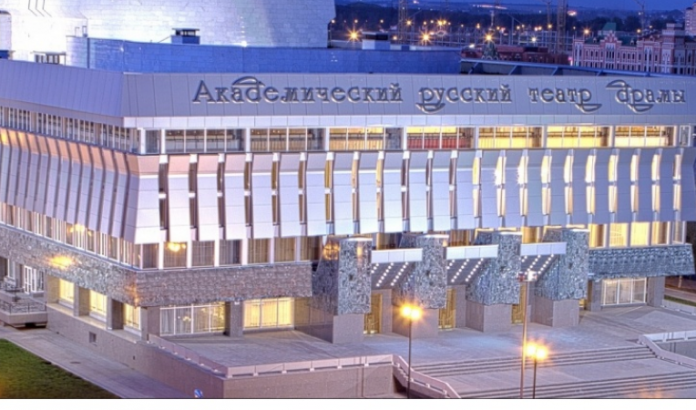
In 1985, the theater moved to a new building on the banks of the Malaya Kokshaga River. In 1993, he initiated the International Festival of Russian Theaters of the Republics of Russia and CIS countries in Yoshkar-Ola, which was a great success.****
****
In 1994, after the death of Georgy Konstantinov, the theater was headed by his son Vladislav Konstantinov, and then, in 2001, by Mikhail Sales. Under Sales, the theater significantly increased the number of productions, and the repertoire became even more diverse. Among the outstanding works of this period are “The Taming of the Shrew” by Shakespeare and “The Idiot” by Dostoevsky.****
****
Since 2008, the theater has revived the tradition of holding the International Festival of Russian Theaters "Bridge of Friendship", at which theater groups from different countries showed their best performances.****
****
In November 2018, Vladislav Georgievich Konstantinov returned to the position of artistic director of the theater. Three years later, in 2021, ARTD established a new tradition - the presentation of the Constantine Prize, which became an important event in the cultural life of the republic.****
****
Today, the Academic Russian Drama Theater named after G. Konstantinov remains the leading theatrical institution in Mari El, continuing the traditions of Russian and world drama and educating new generations of talented actors.
****
On a tragic day for our country, June 22, 1941, the premiere of the first play in Russian, dedicated to a local theme, “Ivan Shust” by I. Ustinov, took place. The plot was based on the uprising of Stepan Razin, part of the events of which took place on the territory of Mari El. The performance became a significant event in the history of the republic and Soviet drama.****
****
During the Great Patriotic War, the theater continued its work, reformatting its repertoire in accordance with the requirements of the time. Patriotic plays were staged on stage, such as “Wait for Me” and “Russian People” by K. Simonov. The theater also did not ignore classical drama - the repertoire included Shakespeare's Othello and Ostrovsky's Enough Simplicity for Every Wise Man.****
****
After the war, from 1946 to 1963, the theater continued to develop Soviet and classical drama. At this time, plays by Ostrovsky, Chekhov, Fonvizin were staged, as well as works by foreign authors - Schiller, Moliere, Shakespeare. The theater also turned to national drama, staging plays by Mari authors such as “Ksenia” by A. Volkov and “Black Wolf” by N. Arban.****
****
However, the beginning of the 1960s became a crisis for the theater. Due to frequent changes in management and fragmentation in the choice of repertoire, the theater was on the verge of collapse. By 1964, there were just over 20 people left in the troupe, and the financial situation was critical.****
****
With the arrival of chief director Georgy Konstantinov in 1964, a new era began. He managed to unite the team and return the theater to a creative purpose. Konstantinov’s productions, such as “Conscience” by D. Pavlova and “Othello” by Shakespeare, received a wide response from the audience. The theater was also replenished with young talented actors who became its basis for many years.****
****
One of Konstantinov’s landmark productions was A. Tolstoy’s tragedy “Tsar Fyodor Ioannovich,” for which the theater received the State Prize of the MASSR in 1974.****
****
In 1985, the theater moved to a new building on the banks of the Malaya Kokshaga River. In 1993, he initiated the International Festival of Russian Theaters of the Republics of Russia and CIS countries in Yoshkar-Ola, which was a great success.****
****
In 1994, after the death of Georgy Konstantinov, the theater was headed by his son Vladislav Konstantinov, and then, in 2001, by Mikhail Sales. Under Sales, the theater significantly increased the number of productions, and the repertoire became even more diverse. Among the outstanding works of this period are “The Taming of the Shrew” by Shakespeare and “The Idiot” by Dostoevsky.****
****
Since 2008, the theater has revived the tradition of holding the International Festival of Russian Theaters "Bridge of Friendship", at which theater groups from different countries showed their best performances.****
****
In November 2018, Vladislav Georgievich Konstantinov returned to the position of artistic director of the theater. Three years later, in 2021, ARTD established a new tradition - the presentation of the Constantine Prize, which became an important event in the cultural life of the republic.****
****
Today, the Academic Russian Drama Theater named after G. Konstantinov remains the leading theatrical institution in Mari El, continuing the traditions of Russian and world drama and educating new generations of talented actors.