


Forty steps and three bows: funeral traditions of the Mari people
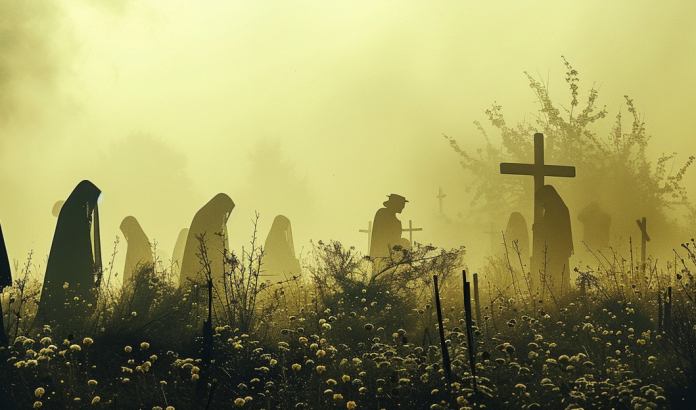
Mari culture is unique in its combination of pagan and Orthodox traditions. This unusual combination is visible in many rites and rituals of the Mari people. Including funeral and memorial services.****
****
The Mari believe that death is a creature that comes to a person in various guises in order to take him to another world to a new life. The adult aziren (spirit of death) cut the throat with a knife, and crushed small children with a floorboard.****
****
One of the traditions of the Mari people is associated with this belief. A fresh towel is hung next to the deceased and a container of clean water is placed so that the spirit can wash the bloody knife. According to another version, water was needed so that a person’s soul could rinse before leaving for another world.****
****
The deceased was washed by those whom he indicated during his lifetime. They did this on the floor, and the water was poured into one place, away from people and pets.****
****
A person was sent on his final journey in clean clothes. It must have been worn at least once during its lifetime. Otherwise, according to the Mari, the deceased will not be able to wear it in the afterlife. Also, warm clothes were often placed in the coffin or fur mittens were placed on the hands of the deceased. There is evidence that the body was covered with novina (freshly cut bread). They laid out her coffin.****
****
Many cultures have a custom of mourning the dead. In the traditions of the Mari people, everything is different. According to beliefs, the soul from the afterlife sees everything the other way around: bitter tears and sincere experiences may seem to her like ridicule and joy. Therefore, while the coffin with the body is in the house, it is customary to sing funny songs that the deceased loved.****
****
Christianization and long-term living next to the Russian people greatly affected the traditions of the Mari. The funeral process is practically no different from the Russian one: relatives say goodbye to the deceased at home, the priest performs the funeral service for him in the church. The only difference: before lowering the coffin into the grave, the lid is opened so that the deceased “looks at the white light” for the last time.****
****
After the funeral, everyone returns home to remember the deceased. They also gather on the third, seventh and fortieth days. If the commemoration on the third and fortieth day coincides with Christian tradition, then the seventh day is a memorial day only among the Mari. It is believed that during this time the human soul travels through seven worlds and is capable of being reborn up to seven times.****
****
The funeral on the fortieth day is held more solemnly. Relatives set the tables, invite the mummer to play the role of the deceased, and light a special candle - a colo variety. When it burns out, those who remember them go to the road to see off the “dead man.” They take food, wine and a candle with them. Having reached the road, the mummer pours out the wine and breaks the bottle. Then he counts forty steps, bows three times and returns back forward. None of the relatives sing. All you can hear is crying and lamentations.****
****
As mentioned above, Christianization and proximity to the Russian people greatly influenced the traditions of the Mari. Nevertheless, they managed to maintain originality and uniqueness in all spheres of life: from the wide celebration of weddings to seeing off a person on his last journey.
****
The Mari believe that death is a creature that comes to a person in various guises in order to take him to another world to a new life. The adult aziren (spirit of death) cut the throat with a knife, and crushed small children with a floorboard.****
****
One of the traditions of the Mari people is associated with this belief. A fresh towel is hung next to the deceased and a container of clean water is placed so that the spirit can wash the bloody knife. According to another version, water was needed so that a person’s soul could rinse before leaving for another world.****
****
The deceased was washed by those whom he indicated during his lifetime. They did this on the floor, and the water was poured into one place, away from people and pets.****
****
A person was sent on his final journey in clean clothes. It must have been worn at least once during its lifetime. Otherwise, according to the Mari, the deceased will not be able to wear it in the afterlife. Also, warm clothes were often placed in the coffin or fur mittens were placed on the hands of the deceased. There is evidence that the body was covered with novina (freshly cut bread). They laid out her coffin.****
****
Many cultures have a custom of mourning the dead. In the traditions of the Mari people, everything is different. According to beliefs, the soul from the afterlife sees everything the other way around: bitter tears and sincere experiences may seem to her like ridicule and joy. Therefore, while the coffin with the body is in the house, it is customary to sing funny songs that the deceased loved.****
****
Christianization and long-term living next to the Russian people greatly affected the traditions of the Mari. The funeral process is practically no different from the Russian one: relatives say goodbye to the deceased at home, the priest performs the funeral service for him in the church. The only difference: before lowering the coffin into the grave, the lid is opened so that the deceased “looks at the white light” for the last time.****
****
After the funeral, everyone returns home to remember the deceased. They also gather on the third, seventh and fortieth days. If the commemoration on the third and fortieth day coincides with Christian tradition, then the seventh day is a memorial day only among the Mari. It is believed that during this time the human soul travels through seven worlds and is capable of being reborn up to seven times.****
****
The funeral on the fortieth day is held more solemnly. Relatives set the tables, invite the mummer to play the role of the deceased, and light a special candle - a colo variety. When it burns out, those who remember them go to the road to see off the “dead man.” They take food, wine and a candle with them. Having reached the road, the mummer pours out the wine and breaks the bottle. Then he counts forty steps, bows three times and returns back forward. None of the relatives sing. All you can hear is crying and lamentations.****
****
As mentioned above, Christianization and proximity to the Russian people greatly influenced the traditions of the Mari. Nevertheless, they managed to maintain originality and uniqueness in all spheres of life: from the wide celebration of weddings to seeing off a person on his last journey.