


Symbols of Yoshkar-Ola
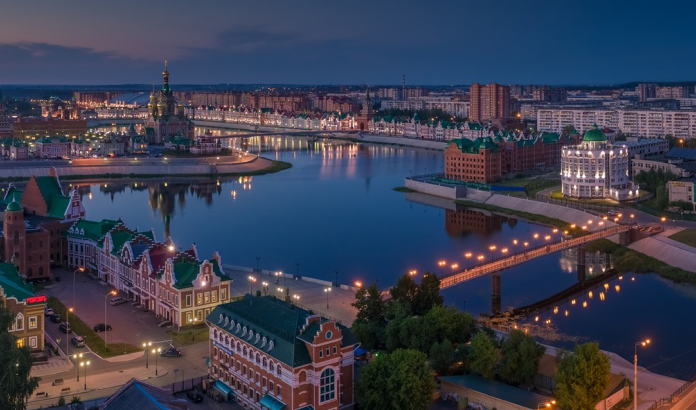
Yoshkar-Ola is a city with a rich history, where nature is intertwined with cultural traditions, and each symbol has its own deep meaning. The coat of arms, flag and anthem are not just attributes, but a reflection of the spirit of the capital Mari El.****
****
****Coat of arms of Yoshkar-Ola********
****
The history of the coat of arms begins in the 18th century, when Yoshkar-Ola was called Tsarevokokshaisk. The first coat of arms was approved on October 18, 1781 by decree of Catherine II. It was an elegant French shield, in the upper part of which there was a black dragon with red wings and a golden crown, a symbol of the Kazan province. At the bottom was a silver elk on a blue background. The elk represented the abundance of animals in the forests for which these places were famous.****
****
Almost two centuries later, in 1968, the city’s coat of arms was updated. New version created by N.V. Ivanov, included: a snowflake and a gear, symbolizing harsh winters and industrial development; the white moose, reflecting natural wealth and strength; red and blue colors, reminiscent of the flag of the RSFSR. This coat of arms clearly conveyed the spirit of the times, emphasizing the industrial potential of the city.****
****
In 2005, the coat of arms changed again: a silver moose cow on a blue background became the main element. The shield was crowned with a tower crown with a national Mari ornament, symbolizing the status of the capital and connection with the national culture.****
****
The modern coat of arms, approved in 2011, has become the quintessence of all previous options. The blue shield depicts a silver elk with golden horns and hooves - a symbol of strength, nobility and natural wealth of Yoshkar-Ola.****
****
****Flag of Yoshkar-Ola********
****
The city flag complements the coat of arms and emphasizes its significance. The current flag, adopted on June 22, 2011, is a blue panel, in the center of which is a silver elk with golden horns and hooves.****
****
Previously, since 2006, the flag included a white stripe with a Mari ornament and an image of a moose cow. But over time, the elements were simplified, leaving only the main symbols of the city.****
****
Anthem of Yoshkar-Ola****
****
If the coat of arms and flag tell about the strength and wealth of Yoshkar-Ola, then the anthem reveals its soul. “Song about Yoshkar-Ola”, written by composer Andrei Eshpai with lyrics by Leonid Derbenev, was approved in 1997. It is performed by the legendary Eduard Khil, and the words of the anthem convey love for his native land:****
****
There are countless numbers on earth****
Large cities,****
And for the whole year****
Don't go around them.****
But in any region****
I always sing about one thing:****
****
Chorus:****
Yoshkar-Ola,****
I see again****
Bridges over spring Kokshaga.****
Yoshkar-Ola,****
Land of the fathers,****
You are forever in my heart.****
****
And you in the distance,****
My good city,****
I remember****
Like a home.****
Let the years fly,****
I am your faithful son forever!****
****
Chorus:****
Yoshkar-Ola,****
I see again****
Bridges over spring Kokshaga.****
Yoshkar-Ola,****
Land of the fathers,****
You are forever in my heart.****
****
These lines not only touch to the core, but also emphasize the uniqueness of the city, where nature and tradition live in harmony.****
****
The state symbols of Yoshkar-Ola are not just images on shields and flags, but the living history of the city. The coat of arms tells of its past, the flag emphasizes unity, and the anthem awakens feelings and inspires.****
****
Each symbol invites city guests to look at Yoshkar-Ola not only as an administrative center, but also as a place with a rich soul, living in harmony with nature and traditions.
****
****Coat of arms of Yoshkar-Ola********
****
The history of the coat of arms begins in the 18th century, when Yoshkar-Ola was called Tsarevokokshaisk. The first coat of arms was approved on October 18, 1781 by decree of Catherine II. It was an elegant French shield, in the upper part of which there was a black dragon with red wings and a golden crown, a symbol of the Kazan province. At the bottom was a silver elk on a blue background. The elk represented the abundance of animals in the forests for which these places were famous.****
****
Almost two centuries later, in 1968, the city’s coat of arms was updated. New version created by N.V. Ivanov, included: a snowflake and a gear, symbolizing harsh winters and industrial development; the white moose, reflecting natural wealth and strength; red and blue colors, reminiscent of the flag of the RSFSR. This coat of arms clearly conveyed the spirit of the times, emphasizing the industrial potential of the city.****
****
In 2005, the coat of arms changed again: a silver moose cow on a blue background became the main element. The shield was crowned with a tower crown with a national Mari ornament, symbolizing the status of the capital and connection with the national culture.****
****
The modern coat of arms, approved in 2011, has become the quintessence of all previous options. The blue shield depicts a silver elk with golden horns and hooves - a symbol of strength, nobility and natural wealth of Yoshkar-Ola.****
****
****Flag of Yoshkar-Ola********
****
The city flag complements the coat of arms and emphasizes its significance. The current flag, adopted on June 22, 2011, is a blue panel, in the center of which is a silver elk with golden horns and hooves.****
****
Previously, since 2006, the flag included a white stripe with a Mari ornament and an image of a moose cow. But over time, the elements were simplified, leaving only the main symbols of the city.****
****
Anthem of Yoshkar-Ola****
****
If the coat of arms and flag tell about the strength and wealth of Yoshkar-Ola, then the anthem reveals its soul. “Song about Yoshkar-Ola”, written by composer Andrei Eshpai with lyrics by Leonid Derbenev, was approved in 1997. It is performed by the legendary Eduard Khil, and the words of the anthem convey love for his native land:****
****
There are countless numbers on earth****
Large cities,****
And for the whole year****
Don't go around them.****
But in any region****
I always sing about one thing:****
****
Chorus:****
Yoshkar-Ola,****
I see again****
Bridges over spring Kokshaga.****
Yoshkar-Ola,****
Land of the fathers,****
You are forever in my heart.****
****
And you in the distance,****
My good city,****
I remember****
Like a home.****
Let the years fly,****
I am your faithful son forever!****
****
Chorus:****
Yoshkar-Ola,****
I see again****
Bridges over spring Kokshaga.****
Yoshkar-Ola,****
Land of the fathers,****
You are forever in my heart.****
****
These lines not only touch to the core, but also emphasize the uniqueness of the city, where nature and tradition live in harmony.****
****
The state symbols of Yoshkar-Ola are not just images on shields and flags, but the living history of the city. The coat of arms tells of its past, the flag emphasizes unity, and the anthem awakens feelings and inspires.****
****
Each symbol invites city guests to look at Yoshkar-Ola not only as an administrative center, but also as a place with a rich soul, living in harmony with nature and traditions.