


Medvedevsky district - the birthplace of three Heroes of the Soviet Union
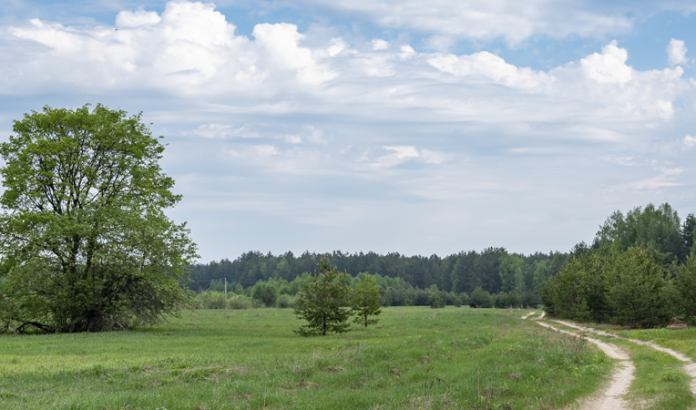
************Medvedevsky district is one of the most impressive places in the Republic of Mari El, where natural beauty is harmoniously combined with the rich historical and cultural heritage of the Mari people.********
************ ********
************ Medvedevsky district was formed on December 6, 1943 during the disaggregation of the Yoshkar-Olinsky district. It included 12 village councils and 93 settlements, where 24,534 people lived. At that time, the district occupied an area of 168,842 hectares, included 88 collective farms and 313 livestock farms.********
************ ********
************ Despite the difficult conditions of the war, the agricultural enterprises of the Medvedevsky district fulfilled their patriotic duty, providing the front with bread and other agricultural products. 11 thousand residents of the region were drafted into the war, of which 3,905 died. Medvedev's land gave the country three Heroes of the Soviet Union: Vasily Arkhipov, Alexander Shumelev and Mikhail Loginov.********
************ ********
************ ********************Vasily Arkhipov************
************ ********
************ Vasily Stepanovich Arkhipov was born on March 26, 1920 in the village of Knyazhna (now Danilovo) into a peasant family. After graduating from the Yoshkar-Ola Pedagogical School, he entered the Mari State Pedagogical Institute, but did not have time to graduate - in 1939 the young man was drafted into the Red Army.********
************ ********
************ Vasily Arkhipov began his military career in the Soviet-Finnish war of 1939-1940. From September 1941, during the Great Patriotic War, he served as a machine gunner in the 131st Cavalry Regiment of the 5th Cavalry Division defending Moscow.********
************ ********
************ Already as the commander of the machine gun crew of the cavalry squadron of the 16th Guards Cavalry Regiment of the Guard, junior sergeant Vasily Arkhipov on December 30, 1941 defended the left flank of his unit near the village of Yamny, Yukhnovsky district, Smolensk (now Kaluga) region.********
************ ********
************ When repelling a counterattack, Vasily Stepanovich destroyed several dozen enemy soldiers. Finding himself surrounded, he preferred death to captivity. By decree of the Presidium of the Supreme Soviet of the USSR on April 12, 1942, he was posthumously awarded the title of Hero of the Soviet Union for “exemplary performance of combat missions of the command and the courage and heroism shown.”********
************ ********
************ Vasily Stepanovich Arkhipov was buried in the city of Sychevka, Smolensk region.********
************ ********
************ ********************Alexander Shumelev************
************ ********
************ Alexander Prokopyevich Shumelev was born on September 7, 1913 in the village of Bolshaya Nolya. He graduated from 10 classes, worked as an inspector at Osoaviakhim in Yoshkar-Ola.********
************ ********
************ He served in military service in 1935-1937: first in the 75th regiment, and then in the Directorate of the NKVD Troops for the Protection of Railways. In 1937 he was transferred to the reserve.********
************ ********
************ In December 1941, Alexander Prokopyevich was drafted into the Red Army. In 1942, he graduated from the Command Improvement Course at the Smolensk Artillery School and began fighting at the front in December of that year. Shumelev was the commander of an artillery platoon and battery on the Voronezh, Bryansk, Central and 1st Ukrainian fronts.********
************ ********
************ His combat record included the Ostrogozh-Rossoshansk and Kharkov operations; battles on the Oryol-Kursk Bulge in the area of the Stanovoy Kolodez station, the villages of Reutovo and Kromy; crossing the Dnieper and the battle on the Bukrinsky bridgehead; Zhitomir-Berdichev, Proskuriv, Lviv-Sandomierz, Vistula-Oder, Upper Silesian operations; crossing of the Oder, Berlin operation, crossing of the Neisse and Spree.********
************ ********
************ Alexander Prokopyevich was seriously wounded twice, but always returned to duty. For his services, he was awarded the title of Hero of the Soviet Union and awarded the Order of Lenin and the Gold Star medal.********
************ ********
************ During the Battle of Berlin, in April 1945, Alexander Shumelev went missing. The events of the last day of his life were restored only 60 years later.********
************ ********
************ After the end of the battle in Fetschau, on April 19, 1945, corps units headed to Boblitz and Baruth. The artillery division's ammunition began to run out, and the commander sent battalion commander Shumelev with the vehicle to the rear ammunition replenishment point. A large group of German soldiers emerged from the forest on the outskirts of Fetschau, fighting their way west from near Görlitz. Shumelev’s car was hit, and Alexander Prokopyevich and his driver took on an unequal battle. The Nazis took the documents and awards of the fallen Soviet soldiers with them. The bodies of Shumelev and the driver were found the next day. They were buried in a mass grave without identification along with the soldiers who died during the assault on Fetschau.********
************ ********
************ ********************Mikhail Loginov************
************ ********
************ Mikhail Nikolaevich Loginov was born on November 15, 1921 in the village of Kuznetsovo. Before the Great Patriotic War, he worked as a tractor driver for the Yoshkar-Ola MTS.********
************ ********
************ From July 1941 to February 1944 he fought on the Western Front, then was transferred to the Belorussian Front. During the war he was wounded three times.********
************ ********
************ In March 1944, junior sergeant Mikhail Loginov commanded a reconnaissance group during the Belarusian offensive operation. Together with his soldiers, he captured 3 German soldiers and valuable documents, and was seriously wounded. For these services, Mikhail Nikolaevich was awarded the Order of the Red Star. ********
************ ********
************ A few months later, on July 15, 1944, during the passage of the 139th Infantry Division to the line of the Neman River (Belarus), Sergeant Loginov was the first from the reconnaissance company, under heavy machine-gun and artillery fire from the enemy, to reconnaissance the ford with two sappers. Having reached the island on which the enemy soldiers were located, Loginov and his comrades opened machine-gun fire on them. The answer to this was a burst of three machine guns from the opposite bank. Mikhail Nikolaevich and the sappers rushed at the machine gunners with their weapons, forcing them to retreat. The division command nominated Mikhail Loginov for the title of Hero of the Soviet Union.********
************ ********
************ In November 1944, having made two crossings across the Narev River, Sergeant Loginov destroyed an enemy machine-gun point, 9 fascists, captured a “language”, a control prisoner and valuable documents. For two operations, Mikhail Nikolaevich was awarded the Order of the Red Banner and twice the Order of the Patriotic War, 2nd degree.********
************ ********
************ At the end of the Great Patriotic War, on March 24, 1945, Mikhail Loginov was awarded the title of Hero of the Soviet Union with the Order of Lenin and the Gold Star medal.********
************ ********
************ After returning home, Mikhail Nikolaevich continued his military career at the Danilovo air garrison and was transferred to the reserve in 1975. ********
************ ********
************ Mikhail Loginov died on January 23, 1982, was buried in the city of Yoshkar-Ola.********
************ ********
************ After the war, the area underwent significant changes: the annexation of new territories, the creation of state farms and the active development of infrastructure. In 1950, 25 collective farms were organized, and in 1960, one of the first state farms, Semenovsky, was organized. Large-scale capital construction, land reclamation and agrochemicals began in the area, feed mills and silos appeared.********
************ ********
************ In 1993, the Bolshaya Kokshaga state reserve was formed in the Medvedevsky district. Its goal was to preserve and study the unique natural complexes of the Bolshaya Kokshaga River basin. Before this, the Marisky Nature Reserve was located here, the territory of which completely burned out in the hot summer of 1972.********
************ ********
************ The area of Bolshaya Kokshagi is 21,428 hectares. The Bolshaya Kokshaga, Shezhener, Vityum, Shamka, and Arya flow through the territory. Lake Shusher is also located in the reserve.********
************ ********
************ The forests of the reserve are inhabited by moose, wild boars, martens, wolves, foxes, weasels, brown bears and other predators. Also in the territory there are many Red Book species.********
************ ********
************ Medvedevsky district, like the entire Mari El Republic, is rich in lakes, which are very popular among both local residents and tourists:********
************ ********
************ – Big Martin;********
************ – Forest Tale (Fortieth);********
************ – Olanga;********
************ – Scorched;********
************ – Salty;********
************ – Bag (Sixteenth);********
************ – Shap;********
************ – Shchuchye.********
************ ********
************ The area also attracts Orthodox pilgrims. In the village of Ezhovo there is an ancient Christian shrine - the Myronositsa Hermitage. The monastery was founded in 1647. There is a legend that it was built on the site of the appearance of the miraculous image of the Blessed Virgin Mary.********
****
************ The center of the district is the urban-type settlement of Medvedevo. In recent years, it has turned into a small city with developed infrastructure and active construction. There is a mini-zoo, the Church of the Sovereign Icon of the Mother of God, the Gaisha Mosque, as well as the Historical and Art Museum.********
************ ********
************ Today, the Medvedevsky district is a place where history is combined with modernity, and popular tourist spots coexist with untouched nature.****
************ ********
************ Medvedevsky district was formed on December 6, 1943 during the disaggregation of the Yoshkar-Olinsky district. It included 12 village councils and 93 settlements, where 24,534 people lived. At that time, the district occupied an area of 168,842 hectares, included 88 collective farms and 313 livestock farms.********
************ ********
************ Despite the difficult conditions of the war, the agricultural enterprises of the Medvedevsky district fulfilled their patriotic duty, providing the front with bread and other agricultural products. 11 thousand residents of the region were drafted into the war, of which 3,905 died. Medvedev's land gave the country three Heroes of the Soviet Union: Vasily Arkhipov, Alexander Shumelev and Mikhail Loginov.********
************ ********
************ ********************Vasily Arkhipov************
************ ********
************ Vasily Stepanovich Arkhipov was born on March 26, 1920 in the village of Knyazhna (now Danilovo) into a peasant family. After graduating from the Yoshkar-Ola Pedagogical School, he entered the Mari State Pedagogical Institute, but did not have time to graduate - in 1939 the young man was drafted into the Red Army.********
************ ********
************ Vasily Arkhipov began his military career in the Soviet-Finnish war of 1939-1940. From September 1941, during the Great Patriotic War, he served as a machine gunner in the 131st Cavalry Regiment of the 5th Cavalry Division defending Moscow.********
************ ********
************ Already as the commander of the machine gun crew of the cavalry squadron of the 16th Guards Cavalry Regiment of the Guard, junior sergeant Vasily Arkhipov on December 30, 1941 defended the left flank of his unit near the village of Yamny, Yukhnovsky district, Smolensk (now Kaluga) region.********
************ ********
************ When repelling a counterattack, Vasily Stepanovich destroyed several dozen enemy soldiers. Finding himself surrounded, he preferred death to captivity. By decree of the Presidium of the Supreme Soviet of the USSR on April 12, 1942, he was posthumously awarded the title of Hero of the Soviet Union for “exemplary performance of combat missions of the command and the courage and heroism shown.”********
************ ********
************ Vasily Stepanovich Arkhipov was buried in the city of Sychevka, Smolensk region.********
************ ********
************ ********************Alexander Shumelev************
************ ********
************ Alexander Prokopyevich Shumelev was born on September 7, 1913 in the village of Bolshaya Nolya. He graduated from 10 classes, worked as an inspector at Osoaviakhim in Yoshkar-Ola.********
************ ********
************ He served in military service in 1935-1937: first in the 75th regiment, and then in the Directorate of the NKVD Troops for the Protection of Railways. In 1937 he was transferred to the reserve.********
************ ********
************ In December 1941, Alexander Prokopyevich was drafted into the Red Army. In 1942, he graduated from the Command Improvement Course at the Smolensk Artillery School and began fighting at the front in December of that year. Shumelev was the commander of an artillery platoon and battery on the Voronezh, Bryansk, Central and 1st Ukrainian fronts.********
************ ********
************ His combat record included the Ostrogozh-Rossoshansk and Kharkov operations; battles on the Oryol-Kursk Bulge in the area of the Stanovoy Kolodez station, the villages of Reutovo and Kromy; crossing the Dnieper and the battle on the Bukrinsky bridgehead; Zhitomir-Berdichev, Proskuriv, Lviv-Sandomierz, Vistula-Oder, Upper Silesian operations; crossing of the Oder, Berlin operation, crossing of the Neisse and Spree.********
************ ********
************ Alexander Prokopyevich was seriously wounded twice, but always returned to duty. For his services, he was awarded the title of Hero of the Soviet Union and awarded the Order of Lenin and the Gold Star medal.********
************ ********
************ During the Battle of Berlin, in April 1945, Alexander Shumelev went missing. The events of the last day of his life were restored only 60 years later.********
************ ********
************ After the end of the battle in Fetschau, on April 19, 1945, corps units headed to Boblitz and Baruth. The artillery division's ammunition began to run out, and the commander sent battalion commander Shumelev with the vehicle to the rear ammunition replenishment point. A large group of German soldiers emerged from the forest on the outskirts of Fetschau, fighting their way west from near Görlitz. Shumelev’s car was hit, and Alexander Prokopyevich and his driver took on an unequal battle. The Nazis took the documents and awards of the fallen Soviet soldiers with them. The bodies of Shumelev and the driver were found the next day. They were buried in a mass grave without identification along with the soldiers who died during the assault on Fetschau.********
************ ********
************ ********************Mikhail Loginov************
************ ********
************ Mikhail Nikolaevich Loginov was born on November 15, 1921 in the village of Kuznetsovo. Before the Great Patriotic War, he worked as a tractor driver for the Yoshkar-Ola MTS.********
************ ********
************ From July 1941 to February 1944 he fought on the Western Front, then was transferred to the Belorussian Front. During the war he was wounded three times.********
************ ********
************ In March 1944, junior sergeant Mikhail Loginov commanded a reconnaissance group during the Belarusian offensive operation. Together with his soldiers, he captured 3 German soldiers and valuable documents, and was seriously wounded. For these services, Mikhail Nikolaevich was awarded the Order of the Red Star. ********
************ ********
************ A few months later, on July 15, 1944, during the passage of the 139th Infantry Division to the line of the Neman River (Belarus), Sergeant Loginov was the first from the reconnaissance company, under heavy machine-gun and artillery fire from the enemy, to reconnaissance the ford with two sappers. Having reached the island on which the enemy soldiers were located, Loginov and his comrades opened machine-gun fire on them. The answer to this was a burst of three machine guns from the opposite bank. Mikhail Nikolaevich and the sappers rushed at the machine gunners with their weapons, forcing them to retreat. The division command nominated Mikhail Loginov for the title of Hero of the Soviet Union.********
************ ********
************ In November 1944, having made two crossings across the Narev River, Sergeant Loginov destroyed an enemy machine-gun point, 9 fascists, captured a “language”, a control prisoner and valuable documents. For two operations, Mikhail Nikolaevich was awarded the Order of the Red Banner and twice the Order of the Patriotic War, 2nd degree.********
************ ********
************ At the end of the Great Patriotic War, on March 24, 1945, Mikhail Loginov was awarded the title of Hero of the Soviet Union with the Order of Lenin and the Gold Star medal.********
************ ********
************ After returning home, Mikhail Nikolaevich continued his military career at the Danilovo air garrison and was transferred to the reserve in 1975. ********
************ ********
************ Mikhail Loginov died on January 23, 1982, was buried in the city of Yoshkar-Ola.********
************ ********
************ After the war, the area underwent significant changes: the annexation of new territories, the creation of state farms and the active development of infrastructure. In 1950, 25 collective farms were organized, and in 1960, one of the first state farms, Semenovsky, was organized. Large-scale capital construction, land reclamation and agrochemicals began in the area, feed mills and silos appeared.********
************ ********
************ In 1993, the Bolshaya Kokshaga state reserve was formed in the Medvedevsky district. Its goal was to preserve and study the unique natural complexes of the Bolshaya Kokshaga River basin. Before this, the Marisky Nature Reserve was located here, the territory of which completely burned out in the hot summer of 1972.********
************ ********
************ The area of Bolshaya Kokshagi is 21,428 hectares. The Bolshaya Kokshaga, Shezhener, Vityum, Shamka, and Arya flow through the territory. Lake Shusher is also located in the reserve.********
************ ********
************ The forests of the reserve are inhabited by moose, wild boars, martens, wolves, foxes, weasels, brown bears and other predators. Also in the territory there are many Red Book species.********
************ ********
************ Medvedevsky district, like the entire Mari El Republic, is rich in lakes, which are very popular among both local residents and tourists:********
************ ********
************ – Big Martin;********
************ – Forest Tale (Fortieth);********
************ – Olanga;********
************ – Scorched;********
************ – Salty;********
************ – Bag (Sixteenth);********
************ – Shap;********
************ – Shchuchye.********
************ ********
************ The area also attracts Orthodox pilgrims. In the village of Ezhovo there is an ancient Christian shrine - the Myronositsa Hermitage. The monastery was founded in 1647. There is a legend that it was built on the site of the appearance of the miraculous image of the Blessed Virgin Mary.********
****
************ The center of the district is the urban-type settlement of Medvedevo. In recent years, it has turned into a small city with developed infrastructure and active construction. There is a mini-zoo, the Church of the Sovereign Icon of the Mother of God, the Gaisha Mosque, as well as the Historical and Art Museum.********
************ ********
************ Today, the Medvedevsky district is a place where history is combined with modernity, and popular tourist spots coexist with untouched nature.****