


Mountain Mari region: Journey through millennia
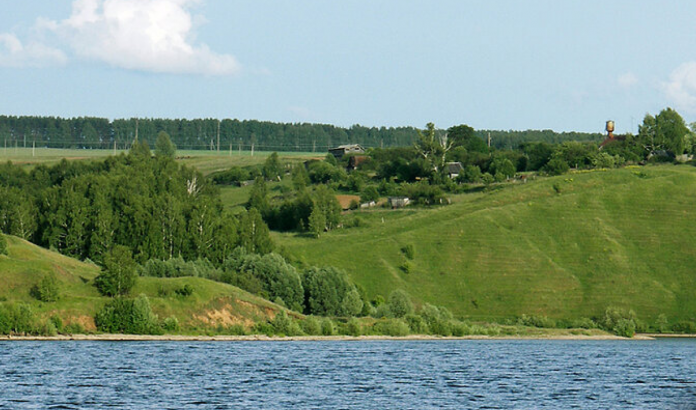
The Mountain Mari region is a unique corner of the Mari El Republic, where every village, hill or river bank is filled with ancient history and cultural layers stretching back thousands of years. From the era of primitive hunters to the times of the Principality of Moscow, from medieval trade routes to modern rural crafts - each period has left its mark on this land. ****
********
********Ancient history: from the Yungo-Kushergskaya site to the Tsepel fortification**** ****
****The history of the Gornomari region begins long before the appearance of the first settlements on Russian territory. About 30-40 thousand years ago, near modern villages, people already lived at the Yungo-Kushergskaya site, a famous place for hunting mammoths and rhinoceroses. These primitive hunters left traces that researchers still find today. ****
****In the Middle Ages, the current lands of the region belonged to the mountain Mari, whose independence was strong. The “History of the Grand Duke of Moscow,” created by Prince Andrei Kurbsky, provides impressive evidence of the Mari who lived an “independent life” and did not belong to anyone. The residence of the princes of the mountain Mari was the Tsepel fortification, located on the site of the modern village of Vasilsursk in the Nizhny Novgorod region. ****
****
****
****
****Trade routes and cultural connections: X–XIII centuries********
****
In the 10th-13th centuries, the region began to actively develop trade relations with its neighbors thanks to the Volga trade route, which connected the Mari lands with Volga Bulgaria. This path made possible cultural exchange, which left a significant imprint on the life and traditions of the mountain Mari. At that time, two groups of Mari became isolated: meadow and mountain, each of which retained unique features and traditions, but gradually became isolated from each other. ****
********
**** **** ******** Influence of the Moscow Principality and the Kazan Khanate: XV-XVI centuries**** ****
****In the 15th century, the territory of the right bank of the Volga came under the influence of the Moscow principality, and the left bank Mari came under the rule of the Kazan Khanate. This division strengthened the cultural differences between the mountain and meadow Mari, however, since 1552, after the capture of Kazan by Ivan the Terrible, the Mari lands became part of the Russian state. ****
********
********Kozmodemyansk and the development of education and medicine: XVIII-XIX centuries**** ****
****From the 18th century, a new era began in the life of the region: the construction of Orthodox churches, the establishment of schools, the development of educational and medical institutions. In 1791, the first school was opened here, and in 1812 a school teaching in the Mari language appeared. By the end of the 19th century, women's schools, men's parochial schools, and even a meteorological station were already operating in the county - an important step towards education and improving living conditions. ****
****Medicine also began to actively develop in the 19th century: the Kozmodemyansk hospital, opened in 1861, already had 32 beds by 1880, and in 1897 the first bacteriological laboratory appeared. The Volga River served as a convenient transport artery through which medicines and goods were delivered, which helped improve medical care. ****
********
********Economic activities: agriculture, trade and crafts**** ****
****Traditionally the area was agricultural, although handicrafts also developed in it. The peasants were engaged in forestry work, making washcloths and wicker furniture, which was sold at fairs. The village became especially famous in the 19th century. Korotni, where hundreds of thousands of bags and mats were produced. ****
********
********Soviet period and industrialization: XX century**** ****
****In the 20th century, as a result of administrative reforms and the creation of the Mari Autonomous Region, the territory of the district underwent many changes. In 1931, the Mountain Mari national region was formed from several counties. In the 1950s, radio broadcasting in the Mari language began to operate for the first time, and clubs and libraries were built on collective farms, which made it possible to strengthen cultural ties between residents. Also during these years, industry developed in the area: a dairy plant and the Potential plant were built in Kozmodemyansk, and later a garment factory. ****
********
********Modernity: cultural preservation and ecotourism**** ****
****Today, the Gornomariysky district is a unique place where visitors can get acquainted with ancient archaeological monuments, such as the burial mounds of the Abashevo culture and the remains of ancient sites. Traditional crafts are still alive and accessible to tourists who want to experience the area's heritage at the Ethnographic Open Air Museum. ****